EU AI Act in Industry: Compliance Without Costly Rework
Learn why compliance by design is critical in industry: local AI creates verifiable evidence, clear accountability, and lower regulatory risk.

The EU AI Act classifies AI systems by risk level – with specific obligations for documentation, transparency, and human oversight. For manufacturing companies, this means: anyone using AI in critical processes must be able to demonstrate without gaps which model made which decision, when, and with which data. With cloud services, this evidence sits with the vendor – and therefore outside your control.
Three requirements where on-premise is structurally stronger
- Complete audit trails: Model versions, inference logs, and data access records are available locally – retrievable at any time, with no dependence on the vendor.
- Risk classification from day 1: OPAIRS helps you assign use cases to criticality levels right when you build them – not retroactively in the compliance review.
- Accountability in-house: Business units, IT, and management share access to the same data foundation – governance becomes controllable, not delegable.

Compliance by design – not by audit
OPAIRS is designed for EU AI Act conformity from the start: every component – from the data lake to SLM inference – runs locally, documented, and under the full control of the company. No data leaves the premises. No certificates have to be requested from a vendor.

One dashboard for risk, model, and approval
The OPAIRS system integrates BI visualization and governance monitoring in a single interface. Production managers, IT, and executive management see the same status – without file ping-pong, without manual reporting loops. This measurably shortens approval processes.
Companies that anchor governance directly in the system architecture spare themselves costly rework. And they build trust internally and externally – the most important asset for any AI initiative.
More insights
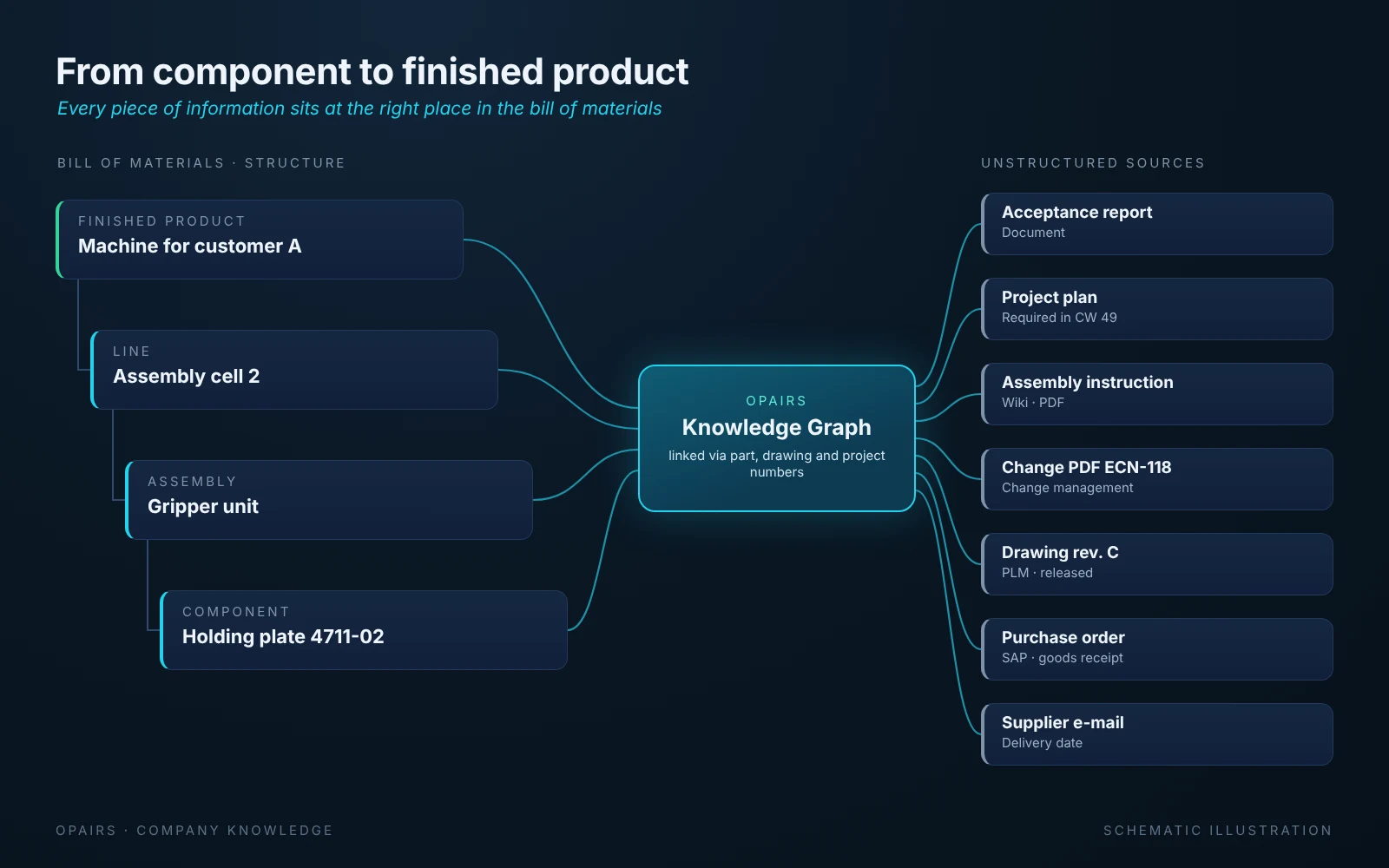
Industrial knowledge base with OPAIRS®: From the bill of materials to company knowledge for production, assembly and quotation costing
A part does not fit, assembly stops, and the worker starts searching: in SAP, in PLM, on the network drive, in the mailbox and among colleagues. OPAIRS organises company knowledge along the bill of materials, attaches drawings, changes and e-mails to the right component and reconciles them with the plan. Instead of searching, people get back to working on the product, and with every project the company’s own knowledge base on processes and production workflows grows.
Read article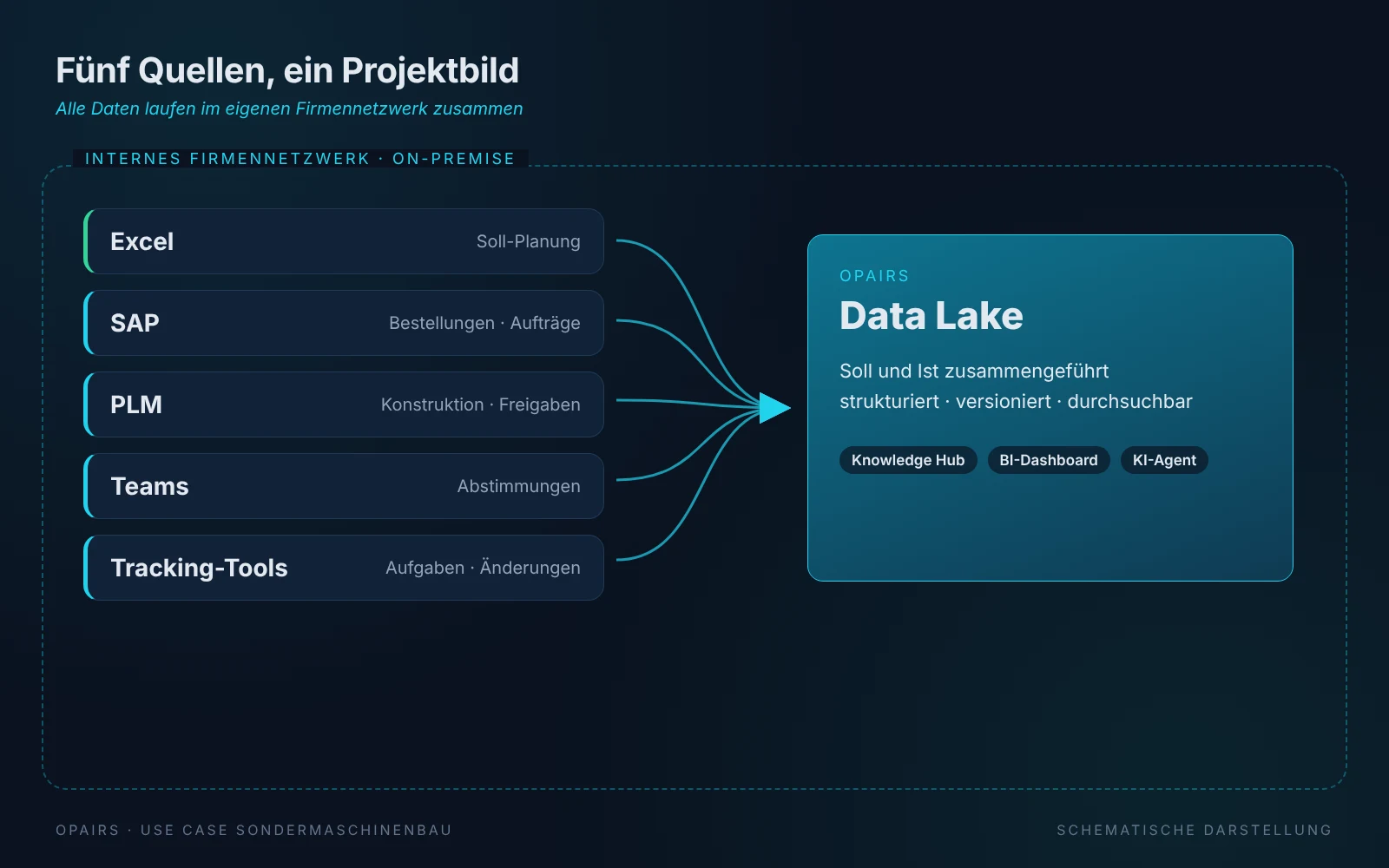
From Excel Plan to Critical Path: How a Special Machinery Builder Manages Its Projects On-Premise
The project plan lives in Excel, while the actual status is spread across SAP, PLM, Teams and the lists kept by each department. A special machinery builder with around 100 million euros in revenue brings both together with OPAIRS: plan and actuals are compared, the critical path becomes visible and the AI derives recommendations. The result: up to 10% fewer project hours and up to 15% less search time. All data stays in-house.
Read article